
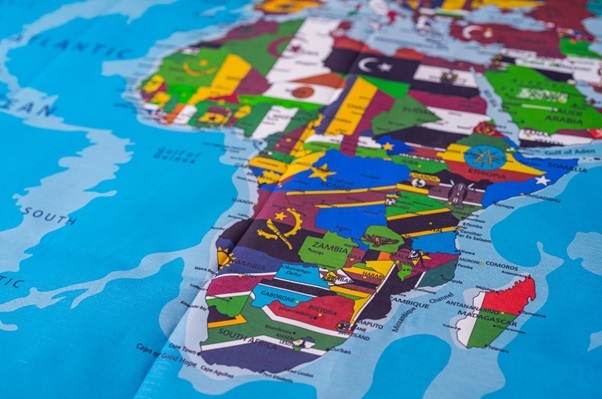
Education attainment varies sharply across Africa, with a handful of countries pulling clear of the rest. Here's the 2026 ranking of the most educated countries on the continent by average years of schooling.
List Of The Top 10Most Educated Countries In Africa 2026
1. Seychelles

In the Seychelles, every resident is required to go to school since education is regarded as to be of paramount relevance. Said another way, the country has been successful in reaching its goal of “education for all,” as stated by the United Nations Educational, Scientific, and Cultural Organization (UNESCO). The three languages used in the classroom for student level instruction are Creole, English, and French. With a score of 69.3, Seychelles ranks highest among all the countries having the best educational systems worldwide. This makes Seychelles the country with the most degree of education across continental Africa.
2. Tunisia

With a total score of 61.4 points when all points count, Tunisia’s educational system ranks 71st in the whole globe. This is the case since the government of Tunisia values education highly and lays a lot of importance on it. The education sector has had support from around twenty percent of the whole national budget, which has been set aside for it. Since the 1990s, Tunisia has been able to carry out policies that boost economic growth, which has resulted in the creation of an educational system with hitherto unheard-of degree of brilliance. The capacity of the nation to carry out these policies has made this development feasible.
3. Mauritius

With 61 points and 74th worldwide ranking, Mauritius is regarded as one of the nations in Africa with the best level of education. This is so because of its third ranking. A sixteen-year-old person has to keep their education going and keep going to school past that age. The educational systems in this country provide vocational training a lot of importance in order to stand out from the ones of other countries. The percentage of people who can read and write year after year shows a clear increase when compared to the year before.
4. South Africa

South Africa boasts one of the largest percentages of people who are literate in reading and writing, so it is among the most successful nation in Africa. Though ranked fourth in Africa, it comes 84th overall with 58.4 points when compared to the educational systems of other countries across the globe. Children between the ages of six and fifteen were mandated to attend school per the South African Schools Act of 1996. The children have this responsibility.
5. Algeria

French and Arabic are the languages that are most frequently used in educational settings. Furthermore, educational institutions instruct students in the languages of Italian, Spanish, German, and English. From elementary education through secondary school, students are mandated to study the Berber language. At this time, it was unanimously determined that the Berber language should serve as the national language. Algeria’s literacy rate is 57.4 percent, ranking it fifth among African nations. The compulsory attendance of students at school commences at the age of six and continues until the age of fifteen. Pupils are required to attend schools.
6. Botswana

Botswana, with a population of 2,351,627 and an outstanding literacy rate of 88.50%, is now ranked sixth among the nations in Africa having the highest proportion of educated citizens. These elements taken together help to explain Botswana’s amazing literacy rate. Although Botswana does not tax its people for the provision of education, attendance in a school is definitely not mandatory. Except for the University of Botswana, all of the educational institutions in Botswana fall under the jurisdiction of the Ministry of Education, which handles general system management for education. Although participation in schools is voluntary, the first ten years of education—starting at the age of six—are free of cost. This is true even if one chooses not to attend classes. Primary education is given for seven years altogether in this period; the first four years are taught in Setswana and the succeeding courses in English. There are seven years overall that secondary education is offered.
7. Kenya
 Kenya, with a 55.4 score, comes 95th on the worldwide list of nations with highest rates of literacy. Kenya is in at 95th place this-wise. About twenty percent of the whole government of Kenya’s authorized budget is thought to go toward the education sector. The global Economic Forum claims that Kenyan educational system is often seen as the most competitive one in the whole world. In the framework of helping the educational sector, the government has developed several initiatives to do this. Among these initiatives was the creation of the National Assessment Center (NAC), meant to review student academic development over their academic careers.
8. Cape Verde
 Having scored 53.3 points thus far, Cape Verde is presently ranked ninth in Africa and 98th in the world. The country has made great achievement in reaching its goal of giving every one of its citizens at least a minimum degree of education. The structure of the system might be explained using a design or organization that would fit best a six-to- six formal education model. Children must attend primary school for six years beginning when they are six years old and continuing until they are eight years old. Their need starts at six years old. Beginning in seventh grade and finishing in twelfth grade, secondary education runs five years overall. Those who want more advanced degrees of education have them at hand.
9. Libya

Ranked Nineth overall, Libya boasts the highest degree of literacy among all the nations in Africa. Apart from ensuring that its people would have access to free basic education, the Libyan government also ensures that they would be obliged to acquire it. This is done to underline the commitment of the company to learning. Though Libya has a past of civil strife, the administration of the nation is now making major efforts to create stability and order in the nation. Libya’s wealth of oil reserves is one of the factors that makes it regarded as among the richest nations on Africa. Among the nations in Africa, Libya is especially among those with higher degrees of education.
10. Zimbabwe

Zimbabwe is the tenth most educated nation in Africa, according to the overall rankings. The major phase of Zimbabwe’s educational system lasts for seven years and comprises of six years of secondary education following a primary phase that lasts for seven years. This allows students to pursue higher education either inside Zimbabwe or in other countries. In Zimbabwe, the academic calendar spans from January to December and is comprised of three-month terms that are separated by one-month breaks. This results in a total of forty weeks of education being provided each year.



Comments (0)